
Technology
Community colleges rush to expand semiconductor training as labor shortage looms US chip industry
By Marcus Chen
Advertisement · Why this ad?
Marcus manages the day-to-day editorial workflow across all brands, coordinating coverage assignments and ensuring editorial standards are met. He previously served as city editor at the Pioneer Press and holds a degree in Political Science from Carleton College.
More from Marcus →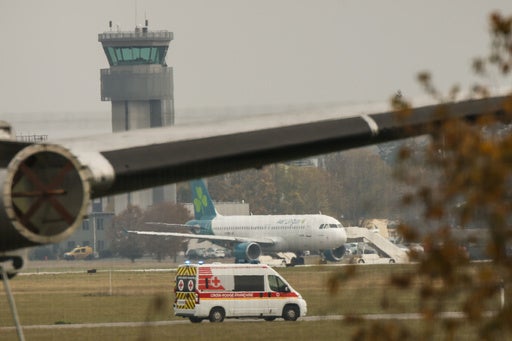
As the sun rose over Europe on November 5, 2026, travelers prepared for their journeys, unaware that a wave of bomb threats would soon disrupt their plans. An Aer Lingus flight from Dublin to Rome, carrying 151 passengers, was forced to divert to a military air base in Evreux, France, after a bomb threat was reported. The incident set off a chain reaction, leading to emergency landings and military escorts for multiple flights across the continent.
On Thursday, bomb threats targeted over a dozen flights from cities including Copenhagen, Dublin, Helsinki, Madrid, Milan, and Warsaw. Many flights were diverted for emergency landings, while others managed to land safely at their intended destinations. Transport Secretary Heidi Alexander described these threats as 'malicious hoaxes,' echoing concerns that have emerged in recent weeks.
The European Union’s Transport Commissioner, Apostolos Tzitzikostas, condemned the threats, stating that "any threats against civilians are unacceptable." He confirmed that the EU was coordinating with affected member countries to address the situation and investigate potential links between the threats.
Authorities activated an EU-level information-sharing mechanism on aviation security, emphasizing the importance of collaboration in the face of such incidents. As investigations unfolded, questions arose about the potential for cyberattacks or other coordinated efforts behind the threats.
The swift response to the threats showcased the preparedness of European authorities. The Aer Lingus flight, which diverted to Evreux, was escorted by a French warplane after the threat was confirmed. Upon landing, military bomb disposal teams examined the aircraft, ensuring the safety of all on board.
Meanwhile, an Italian air force fighter jet escorted a Finnair flight from Helsinki to Rome after an email threat was received. The flight landed safely at Rome’s Leonardo da Vinci airport, where police bomb disposal experts conducted thorough inspections, ultimately finding no explosives.
Greece’s Aegean Airlines also reported bomb threats on two flights, one from Thessaloniki to Milan and another from Athens to Vienna. Both flights adhered to security protocols and were cleared to continue their journeys after the threats were deemed baseless.
With multiple countries affected, the incident underscored the need for international cooperation in aviation security. Czech police reported that four planes landing in Prague after being targeted by bomb threats were thoroughly searched, with no suspicious items found. Similarly, a LOT Polish Airlines flight from Warsaw to Brussels landed safely, and inspections revealed no threats.
In Bulgaria, three Ryanair flights bound for Sofia were forced to make emergency landings due to bomb threats. These planes were escorted by fighter jets through Bulgarian airspace, reflecting the seriousness with which authorities treated the situation. The Ministry of Defense confirmed that all three flights landed safely, and no threats were identified.
These bomb threats not only disrupted travel plans but also instilled fear among passengers and their families. The ripple effect of such incidents can be profound, impacting the sense of security that many travelers expect when flying. Families waiting at airports for their loved ones faced anxiety as news of the threats spread.
Travelers like Sarah Thompson, who was en route to visit family in Milan, expressed her concern: "It’s terrifying to think that someone would do this. We just want to travel safely and see our loved ones." Her sentiments reflect a broader unease that can linger long after the immediate threat has passed.
Authorities have emphasized the importance of maintaining safety and security in the face of such challenges. The European airline industry, already grappling with the aftermath of the COVID-19 pandemic, now faces additional hurdles as it navigates public perception and passenger confidence.
Airport staff and security personnel have also shared their experiences during these tense moments. One security officer at Sofia Airport, who wished to remain anonymous, described the atmosphere: "When we received the alerts, there was an immediate sense of urgency. We train for these situations, but the reality is always more intense. You can see the worry in the passengers' faces, and it’s our job to reassure them while ensuring their safety."
Local communities, particularly in the cities affected by the diversions, felt the impact as well. Businesses around airports experienced a sudden drop in foot traffic, with many travelers opting to cancel or postpone their trips. Local hotels faced cancellations, and restaurants that typically cater to airport travelers saw a decline in customers as people stayed home, wary of flying.
As investigations into the bomb threats continue, the focus remains on ensuring the safety of air travel across Europe. Experts are urging for enhanced security measures to prevent future incidents and to reassure the public that their safety is the top priority.
In the coming weeks, the EU plans to hold discussions on strengthening aviation security protocols, with an emphasis on information sharing and response coordination among member states. The goal is to create a more resilient aviation infrastructure capable of addressing emerging threats.
While the immediate threats may have been resolved, the lingering effects on public perception and travel behavior will likely be felt for some time. As travelers resume their journeys, the hope is that they can do so with a renewed sense of confidence in the safety of air travel.
In the face of adversity, communities across Europe are reminded of the importance of unity and vigilance. As families come together, they do so with a commitment to safety and a shared belief in overcoming challenges together. Local governments are also stepping up, with some cities enhancing their emergency response protocols and conducting community outreach to educate the public about safety measures in the wake of these threats.
As the aviation sector works to regain passenger trust, initiatives aimed at improving communication between airlines, airports, and travelers are being prioritized. Airlines are also exploring ways to enhance their security measures, including the use of advanced screening technologies and better training for staff to handle such emergencies.
Ultimately, the hope is that these incidents will lead to a stronger and more secure aviation environment, where passengers can travel with peace of mind, knowing that their safety is being taken seriously.
By Marcus Chen
By Katherine Langford

By Marcus Chen

By Katherine Langford